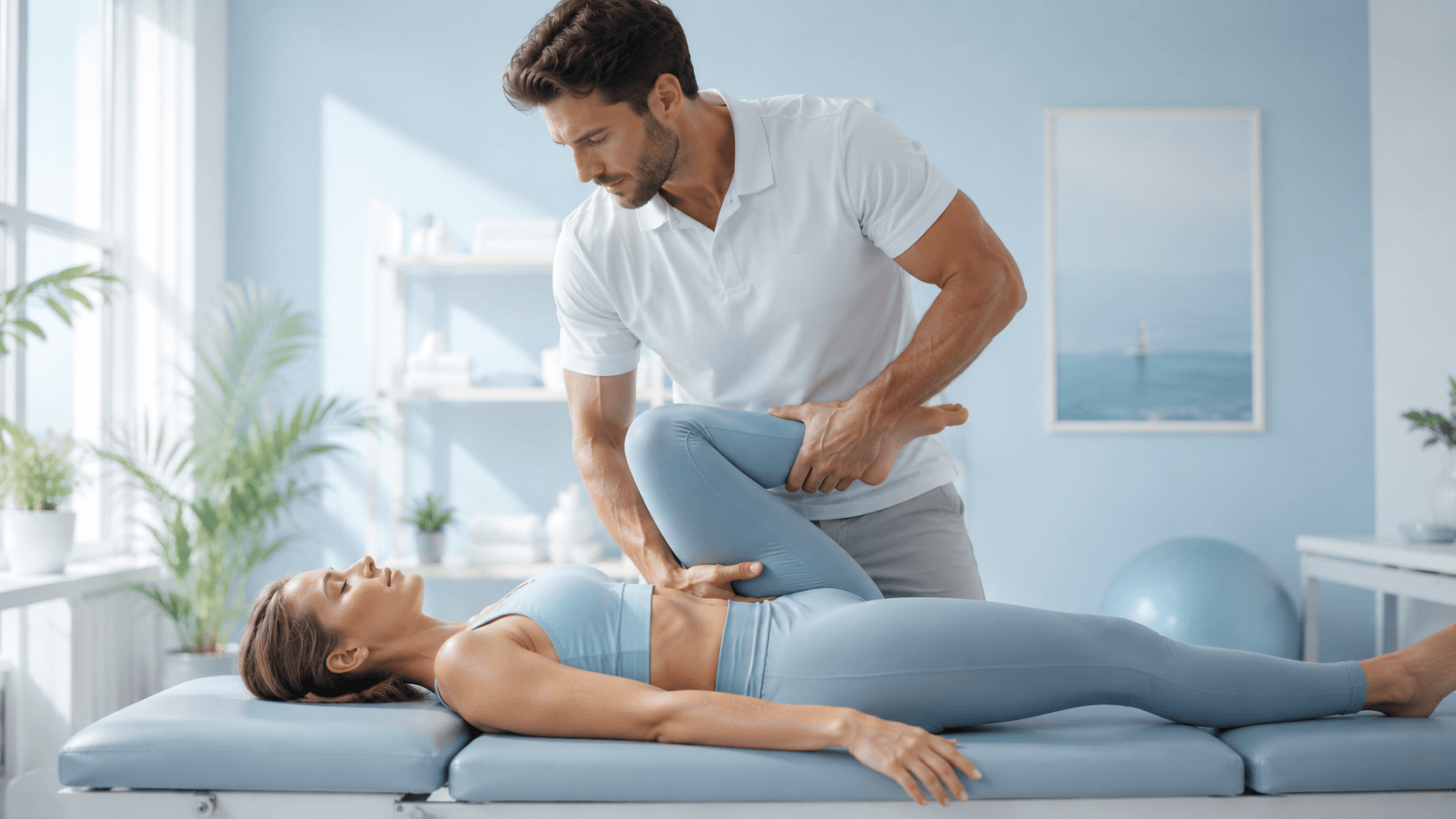
Healing Modality
Stretch Therapy
Assisted stretching that improves mobility and athletic performance.
Why It Works
Muscles that stay chronically shortened from sitting, repetitive movement, or stress pull joints out of alignment, compress nerves, and restrict circulation. Assisted stretching uses proprioceptive neuromuscular facilitation (PNF) and other techniques to release the stretch reflex and achieve deeper elongation than you can reach on your own. When a trained therapist controls the stretch, muscles relax more fully, fascia releases, and the nervous system recalibrates its baseline tension. This is why people leave their first session moving like a different body entirely.
What is STRETCH THERAPY?
Stretch therapy is a structured system of assisted and active stretching designed to improve flexibility, range of motion, and functional movement. Certified stretch therapists complete specialized training in anatomy, movement assessment, and PNF techniques. Unlike a yoga class or solo stretching routine, every session is one-on-one and tailored precisely to your body's needs and restrictions.
What to Expect
Sessions begin with a movement assessment to identify your tightest areas and mobility limitations. You remain fully clothed on a table while the therapist guides you through a series of targeted stretches, holding each position for 30 to 90 seconds. You will likely feel an immediate difference in how you move by the end of your first session. Sessions typically run 30 to 60 minutes and are appropriate for all fitness levels and ages.
Key Benefits
- ✓Dramatically increases flexibility and range of motion
- ✓Improves posture and spinal alignment
- ✓Reduces risk of muscle strains and tears
- ✓Enhances athletic performance and agility
- ✓Accelerates post-workout recovery
- ✓Reduces chronic muscle soreness
- ✓Relieves joint stiffness and discomfort
- ✓Improves balance and proprioception
Conditions It Helps
Frequently Asked Questions
Preparation & Arrival
What should I wear?
Comfortable athletic or workout clothing that allows full range of motion in all directions. Avoid stiff jeans, belts, or anything that restricts movement. You stay fully clothed throughout the entire session.
Should I stretch or warm up before my session?
It is not necessary. Your therapist will warm up the tissue as part of the session. Arriving rested and hydrated is more important than any pre-session preparation.
Should I eat beforehand?
Have a light meal or snack a couple of hours before. Avoid arriving very full since some positions involve the abdomen and torso.
During the Session
Will it hurt?
Assisted stretching should never be painful. You may feel an intense stretching sensation as muscles reach their therapeutic limit, which most people describe as a good discomfort, but sharp or burning pain is a signal to tell your therapist immediately. Most therapists use a 1 to 10 scale and aim to keep you at around a 6 or 7, intense but comfortable.
What is my therapist actually doing?
They are moving your body through a series of targeted positions while you relax, using techniques like proprioceptive neuromuscular facilitation where you briefly contract a muscle against resistance before relaxing into a deeper stretch. This achieves significantly greater muscle release than passive stretching alone.
Do I need to do anything during the session?
Follow your therapist's breath cues and communicate openly about what you feel. When they ask you to contract or relax a muscle, responding actively makes the stretch more effective. Otherwise your job is simply to relax and let them move you.
Aftercare & Results
Will I be sore afterward?
Mild muscle fatigue similar to after a light workout is possible but true soreness is uncommon with proper technique. Most people feel immediate relief and improved mobility right after their first session.
How often should I go?
Once a week produces the most significant and lasting gains in flexibility. Even biweekly or monthly sessions produce noticeable cumulative improvement over time. Your therapist will recommend a frequency based on your goals and current mobility.
When will I see results?
Most people notice an immediate improvement in how they move after their first session. Structural changes in flexibility and range of motion build cumulatively and become more pronounced after 4 to 6 consistent weekly sessions.
Etiquette & Safety
Is stretch therapy safe if I have an injury?
In many cases yes, but always disclose any recent injuries, surgeries, or areas of acute pain before your session. Your therapist will work around affected areas and adapt the session accordingly. If you have had recent surgery, get clearance from your physician before starting.
Is there a difference between stretch therapy and physical therapy stretching?
Yes. Stretch therapy focuses specifically on improving flexibility and range of motion in healthy or recovered individuals. Physical therapy stretching is part of a broader rehabilitation program for diagnosed conditions and injuries. If you have an active injury or unresolved pain, see a physical therapist first.